It’s easy to see the climate change connection in the case of extreme weather events, or when climate scientists publish a major report on their findings.
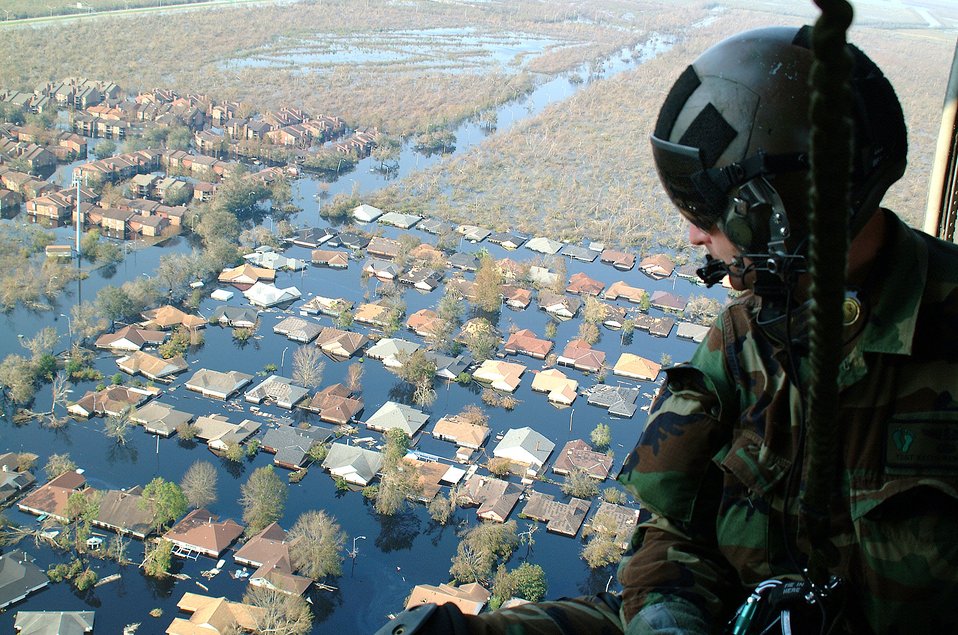
Storms, floods and wildfires are highly impactful, visible events that fit easily into any news agenda.
Flooding in New Orleans. Image: USAF, public domain.
But there’s often a climate dimension to news stories that’s overlooked.
Climate change causes substantial, long term changes to our planet. Some of these changes will permanently affect both human life and nature across the globe.
The rising temperature will cause the extinction of a great number of plants and animals, including most of the world’s coral reefs, one of the most threatened ecosystems by the unregulated climate, which are not only home to many different marine species but also essential to about 500 million people on the planet, who depend on reefs for food supply, work and protection against erosion of the land where they live.
The loss of species leads to the loss of complexity in ecological systems, which is what keeps these systems functioning and allows the millions of species that exist, including humans, to live in abundance.
From a human (and quite utilitarian) perspective, what humanity loses with the lack of biodiversity are the ecosystem services performed by the most diverse organisms, such as pollination, decomposition, seed dispersal and redistribution of water on the planet, as trees do. Without plants, for example, the water cycle slows down, which means less access to water.
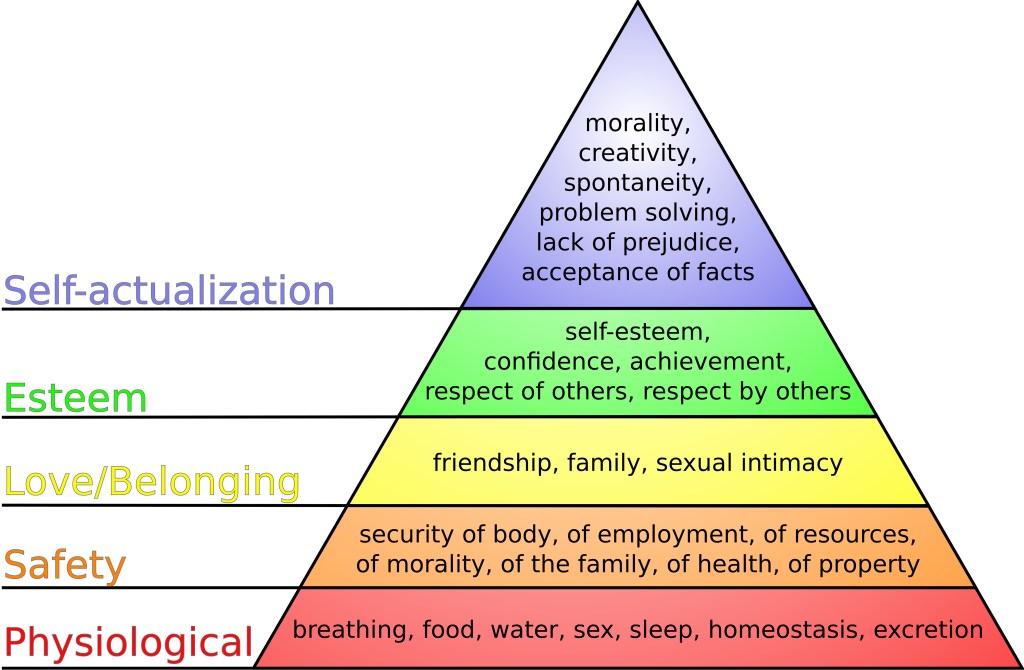
They will impact our most basic and fundamental needs – the air we breathe, the food we eat, our health and homes and livelihoods.
They are fundamental to human life and survival, according to Maslow’s hierarchy of human needs:
Subjects at the bottom of this pyramid are the most vital to human life, and the sorts of issues we cover in the daily news. You can see that climate change is not apart from news – but fundamental to it.
Climate change pervades all aspects of our lives, and we must do more to reflect the consequences of climate change and the choices that we as individuals, businesses and societies might make differently in the future.
We can find a climate aspect in every news section: economics, politics, sports, health, culture, nature conservation and so on.
The news agency Agence France-Presse (AFP) tells its reporters to look for the climate angle in every story.
“A lot of people say that climate change shouldn’t just be in the climate change [news] silo; that we should talk about climate change when we talk about housing, the budget, especially GDP, and when we talk about fuel prices.” Tom Heap, Environment Broadcaster
Here are some ideas to explore the impact of climate change across a range of news beats.
Weather
How does today’s weather compare to historical norms?
How does climate change affect the frequency and intensity of weather events?
What type of weather is predicted for the future?
How are we coping with extreme weather events such as storms and floods and fires?
How are we preparing to better cope with future extreme weather events?
What are we learning from our experience with extreme weather?
What should we do differently?
Health
What evidence is there of the public suffering ill health as a result of increased heat, humidity, breathing in smoke from forest fires, etc?
How will a warmer planet affect people’s health?
Are health professionals seeing signs of novel diseases such as malaria, dengue, zika etc because of increased habitat for mosquitos?
What are the climate relations to pandemics, like covid-19? How does human interference in natural habitats increase the chance of new pandemics?
What advice are health professionals giving to the public in times of extreme or unusual weather?
Building and development
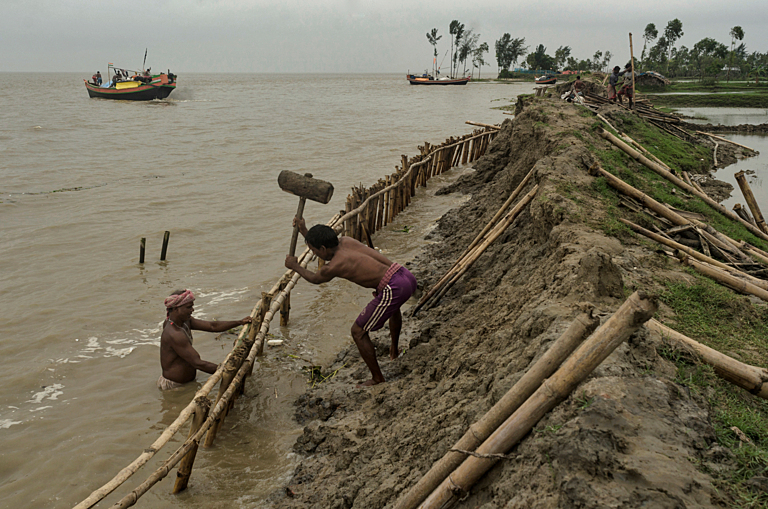
People of Ghoramara Island in the Bay of Bengal strengthen sea defensives against rising sea levels. Photo: Creative Visuals
What restrictions are being placed on buildings and other development which may be affected by flood or coastal erosion?
What plans exist to improve the resilience of public infrastructure (roads, rail, power lines, etc) which may be damaged by extreme weather?
How are seasonal resorts (water sports, winter sports) coping with changing weather patterns?
How is government planning to meet the costs of adaptation to a changing climate – e.g. making infrastructure resilient to storms, floods, increased heat? e.g. moving coastal rail line inland
What is being done to retrofit buildings for a new climate (air conditioning, rising groundwater)
What is being done to improve energy efficiency in older and new buildings?
How are cities adapting to a changing climate using nature-based solutions? – e.g. sponge cities
What are the costs of adapting and investing in green technology versus the costs of dealing with loss and damage and not preparing?
Migration
Are people leaving their homes because their lives and/or livelihoods are no longer sustainable?
Are people displaced by climate change in other regions likely to come here?
Are there opportunities to re-populate depopulated areas?
How are people who live on small islands coping with the effects of climate change and finding local solutions? Will they be forced to leave eventually?
Natural environment
What changes in wildlife habits are being observed? (e.g. birds migrating sooner)
What species are declining or increasing beyond seasonal norms?
To what extent are new (‘alien’) species threatening native species?
What loss of amenity is taking place – e.g. rivers drying up? People like nature!
How are important natural habitats that capture and store carbon, such as forests and water meadows, being harmed or protected?
What negative impacts upon the environment are there from new technologies such as batteries, reforestation and renewable energy plants?
Are plants and animals able to adapt to a fast changing climate?
What are the nature-based solutions that could be implemented in order to protect species and avoid emissions? e.g. agroforestry, reforestation, implementation of conservation units.
Food and farming
Are food options changing as a result of climate change (e.g. crops failing or loss of habitat)
How are farmers changing their practices?
How does climate change affect crops and farming-based economies?
How can people’s diets increase or reduce emissions of greenhouse gases?
How to improve crops and livestocks so they reduce their emissions of greenhouse gases?
What is the role of plant-based options and lab-grown meat in reducing the emissions of greenhouse gases?
What livestock industries are linked to deforestation?
Transport and travel
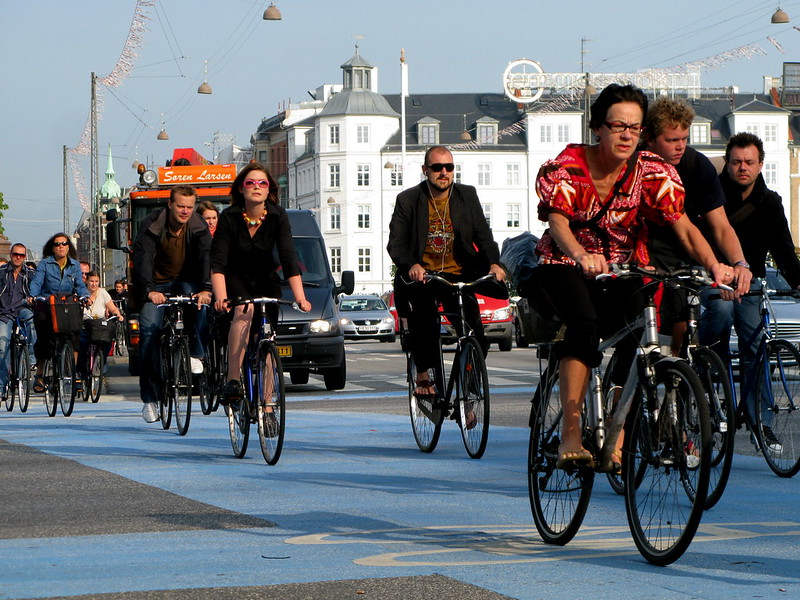
Cycle commuters in Copenhagen, Denmark. Photo: Mikael Colville-Andersen
How are employees being helped to work remotely, e.g. from home or bases closer to their home?
What provision is being made to encourage active travel such as walking, cycling and scooting?
What steps are being taken to improve the availability of public transport?
What steps are being taken to reduce emissions from transport and travel – e.g. by more fuel-efficient vehicles (or maintaining older vehicles properly) and by switching over time to electric vehicles (EVs)?
What is being done to build the infrastructure to support EVs – charging stations, stronger electricity networks?
What subsidies are offered to make EVs more affordable choices?
What plans are there to introduce a ban on the sale of polluting petrol/diesel vehicles?
What restrictions are planned on air travel, especially long haul?
What technology is being developed to reduce emissions, e.g. electric airplanes or those using biofuels?
What steps are being taken to reduce dependency on products made or produced overseas?
What are travel companies (air, cruises) and large hotel chains doing to reduce their waste and greenhouse gas emissions?
Energy
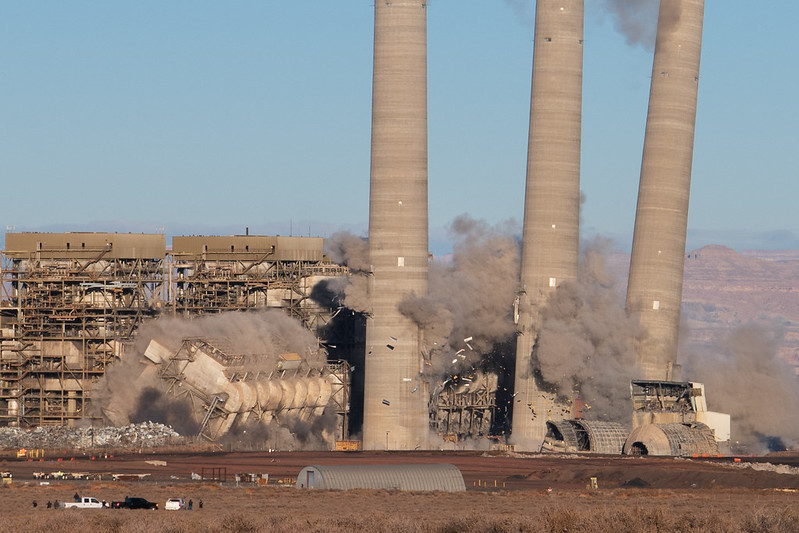
Demolition of Navajo coal-fired power station, Arizona. Photo: Alan Stark
What steps are being taken to close polluting old power stations – especially coal, oil?
Where are renewable energy projects – solar, wind, hydro, nuclear – being built?
How are energy interconnections with neighbouring countries being strengthened?
What is being done to strengthen the electricity grid to provide for the transition to electricity?
What battery or other electricity storage projects exist or are in development?
What is the role of hydrogen?
How is demand for energy being managed?– e.g. making electricity cheaper when renewable is available and much more expensive when it is not.
What offsetting schemes exist or are planned and how well do they meet their promised performance?
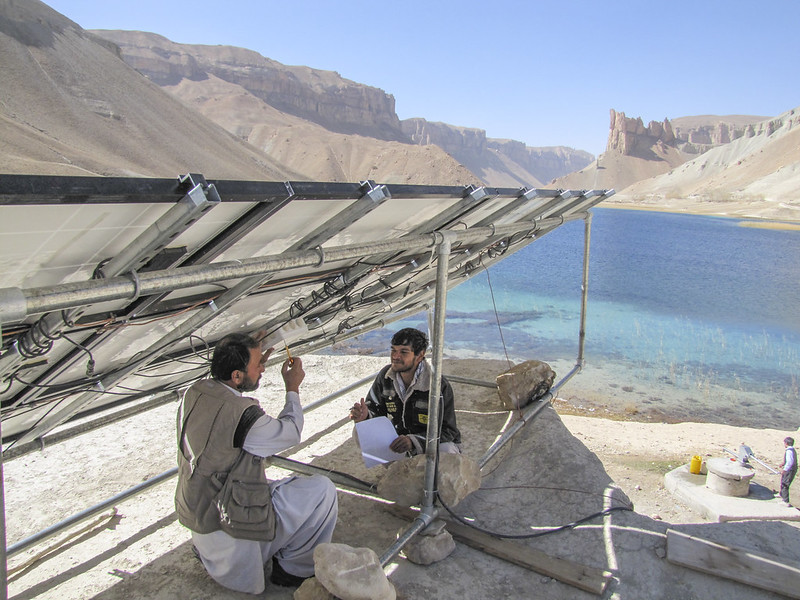
What use is being made of small-scale, local power generation (e.g. small-scale hydro, solar)?
What energy efficiency measures are being introduced?
Industry
The Clean Energy Program is bringing solar power to schools in Afghanistan. Photo: Robert Foster, USAID
How is industry decarbonising?
Who is paying?
Are jobs being lost as industry goes green?
Are there job opportunities – e.g. in cleaner, greener industries?
What is happening to fossil fuel industries?
How could fossil fuel industries turn away from fossil fuels and become greener?
What work is being done around carbon capture and storage?
Which businesses are making good progress and innovating in tackling climate change?
Which are making bold claims but making little progress? (‘greenwash’)
Which industries are actively subverting action on climate change?
Finance
Where is ‘smart money’ going?
Who is selling ethical investments and how effective are they?
Where is the money invested in banks going to? Is it financing climate solutions or fossil fuel and deforestation industries?
How does insurance assess the risks due to climate change?
What taxation, incentives, disincentives and other financial measures are being used to support action on climate change?
Policy-making
What is the state of legislation, regulation on climate change?
Is the government monitoring and fining wrong doers?
Are there governmental financial incentives to polluting industries?
Are there government adaptation and mitigation plans to overcome the consequences of extreme weather events?
Politics and protest
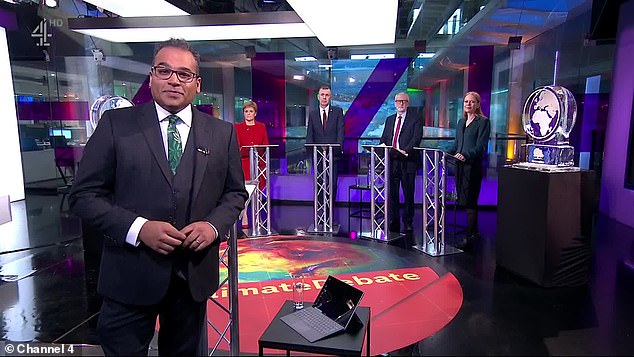
In the UK general election, Channel 4 News held a debate on the parties climate policies in front of a melting ice statue. Photo: Channel 4 News
What do political parties say about climate change?
How is the climate change agenda being held by parties during elections?
What are the climate-related propositions of candidates in elections?
Are they failing to face up to one of the greatest political challenges of our time?
How are the voices of those most affected by climate change being heard?
Why are a growing number of people resorting to public protest and even direct action such as blockading highways or airports? (“If you want people not to protest, listen to them when they say they’re unhappy.”)
Is direct action achieving results where traditional politics has not?
Reflection/Exercise
Try to think of at least three stories or issues that you could cover where climate is an important factor, but haven’t been well reported in your country.
For example:
How insurance premiums are rising because insurers assess that claims are going to increase as a result of climate change
How your national sport is being affected by real or predicted climate change
What city planners are doing to make cities liveable as temperatures keep rising


 Reporting Climate Change: tips from the IFJ