The Earth is protected by a blanket of gas, the atmosphere, which traps heat and keeps the planet within a liveable temperature. This is called the greenhouse effect.
We are lucky to have it. Planets like Mars which have a thinner atmosphere have much greater temperature extremes that humans and other life forms could not tolerate.
However, our planet runs on a delicate balance, and our human activities have been unbalancing this system.
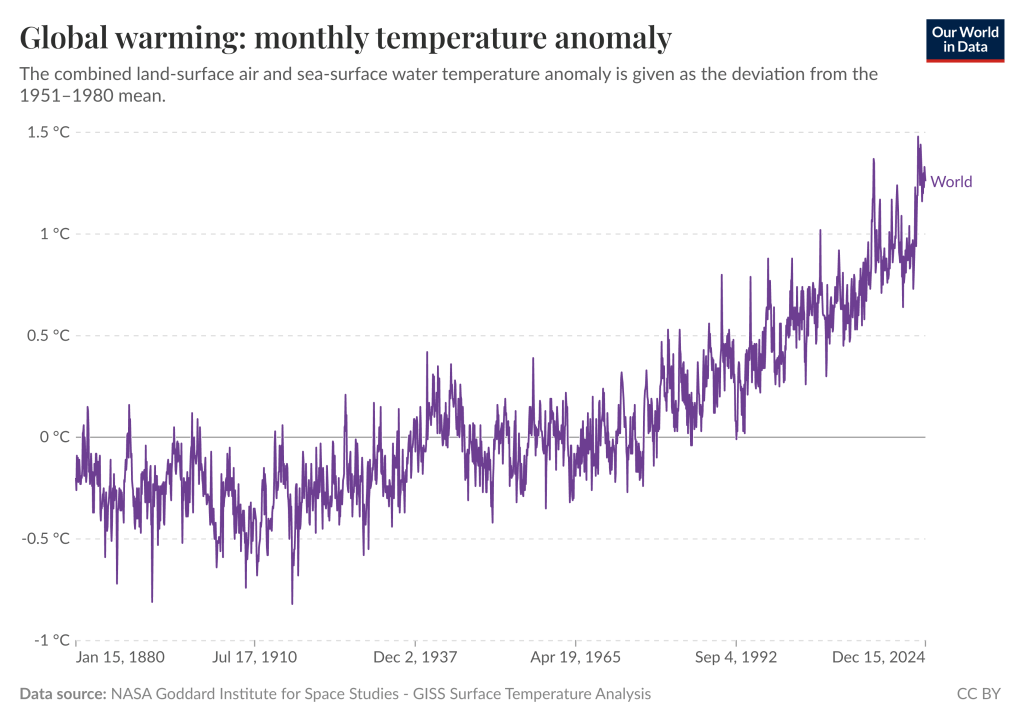
Over the 150 years or so since the world industrialised, we have been releasing carbon-based gases into the atmosphere faster than the Earth’s ability to reabsorb them. These gases increase the greenhouse effect, and stop more of the Earth’s heat from escaping into space. As a result, global temperatures have been steadily rising.
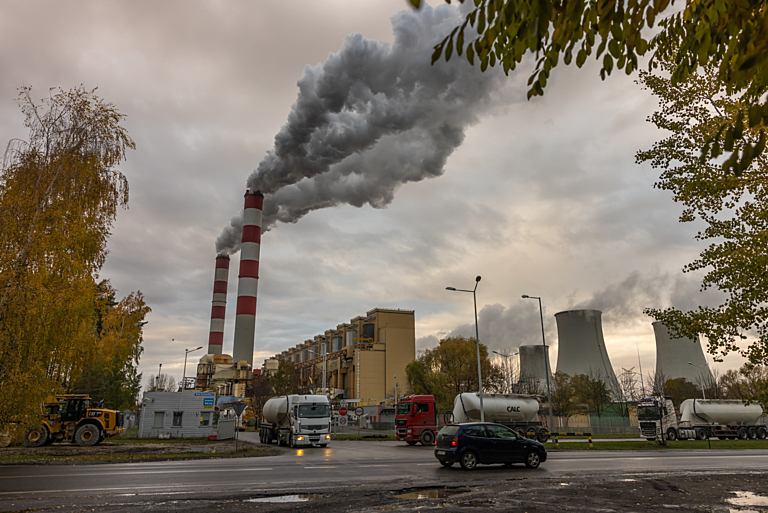
Bełchatow coal-fired power plant, Poland. Photo: Anna Liminowicz, Climate Visuals
These gases are called greenhouse gases.
The most significant is carbon dioxide, or CO2.
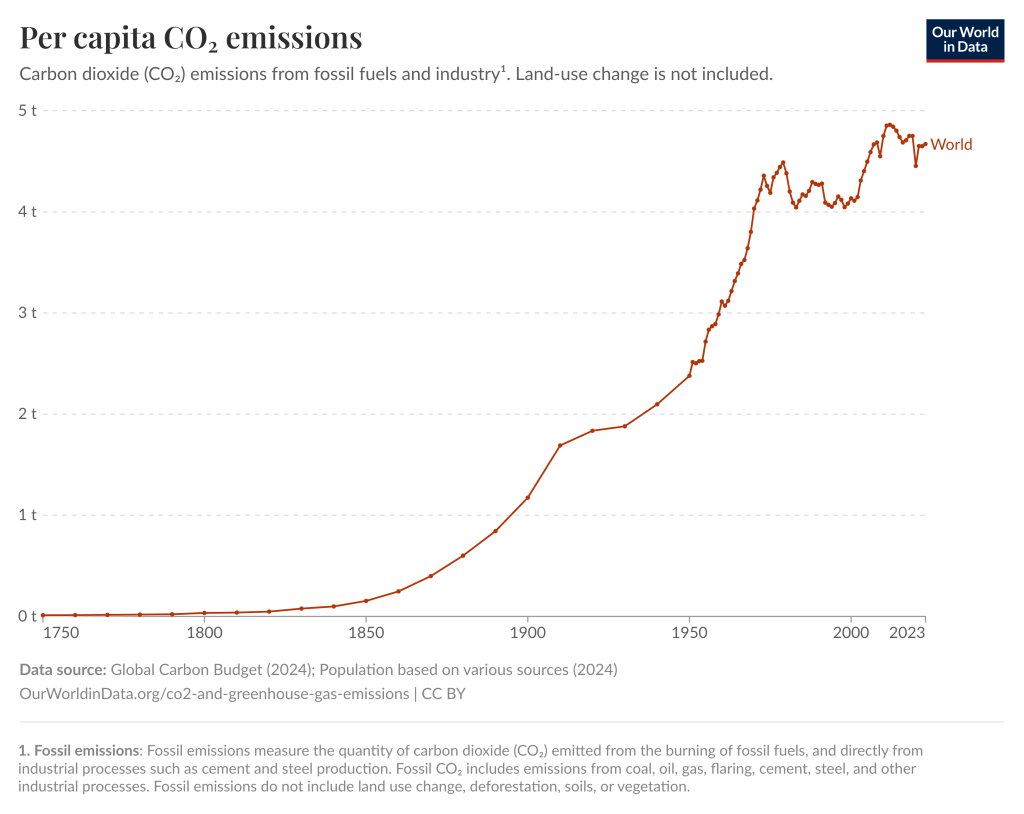
The biggest source of carbon dioxide emissions is the burning of fossil fuels such as coal, oil and gas for energy, heating, industry, livestock and transportation.
Look at how they’ve risen since the Industrial Revolution:
So much carbon dioxide has been released that there is now 50% more in the atmosphere than there was when we started burning industrial quantities of fossil fuels. The level is at its highest in 3,000,000 years.
The other greenhouse gases are:
Methane (CH4), which is released in oil and gas production, by livestock such as cattle, the growing of rice in paddy fields, rotting vegetation and waste tips. (We sometimes call it ‘sewer gas’.) Methane has more than 80 times the warming power of carbon dioxide, but breaks down much more quickly in the atmosphere than carbon dioxide, only remaining in the atmosphere for around 20 years, while CO2 remains for 150. This means that if we reduce methane emissions now, we will feel the benefits more quickly.
Nitrous oxide from agriculture (fertiliser, for example), and industry. This is another gas that remains for 150 years in the atmosphere.
Fluorinated gases (CFCs, f-gases) are non-natural gases which have a wide variety of commercial and industrial uses, including air conditioning and refrigeration. Although the actual volume of emissions is relatively low, they are exceptionally potent greenhouse gases, and it is important we stop releasing them as soon as possible,
Not all of carbon emissions stay in the atmosphere. Around a quarter are absorbed by ‘carbon sinks’ on land, such as trees, other plants, soil and so on. A somewhat smaller amount is absorbed by the sea and plants growing in it. This leaves around 59% – considerably more than half – of these gases to build up in the atmosphere, exacerbating global warming.
As you can see, the temperature rise matches closely the quantity of carbon dioxide released into the atmosphere over the same period.
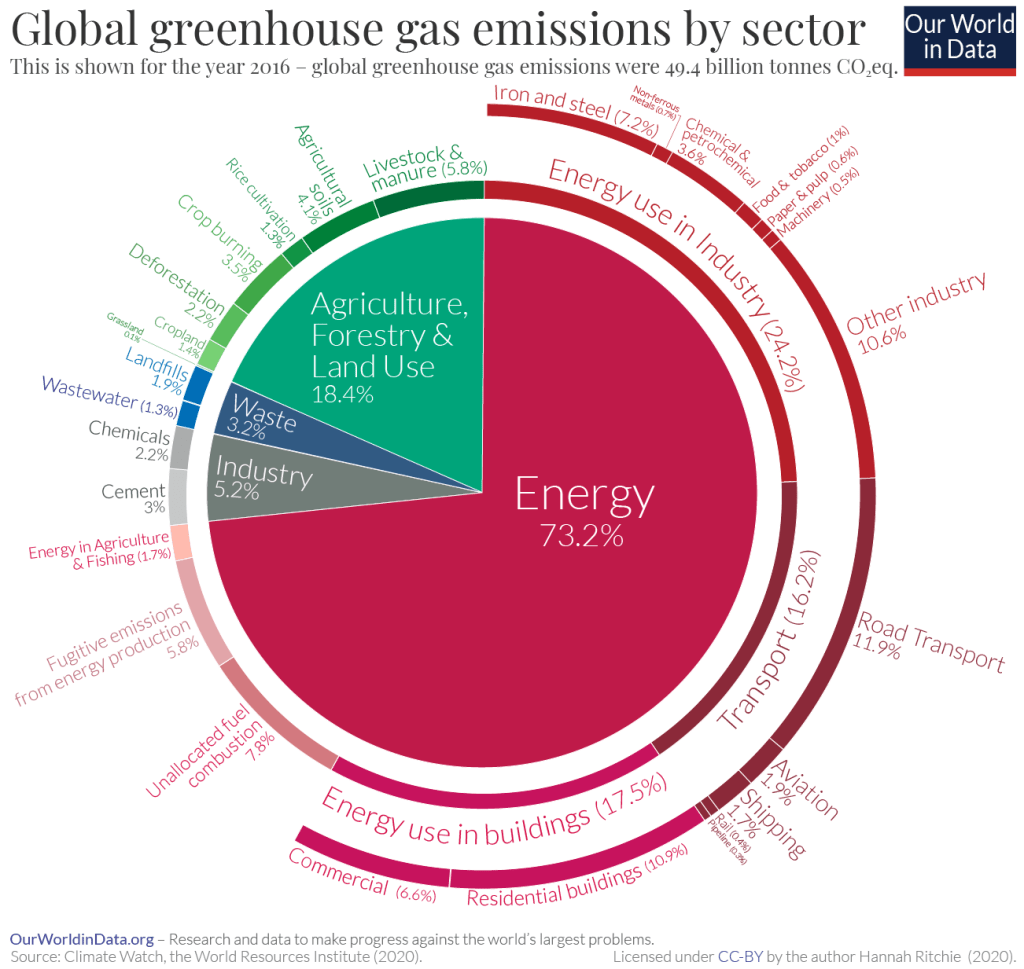
The major sources of greenhouse gas emissions are:
Deforestation (as the trees release the carbon they were storing into the atmosphere when they are burned or decompose)
Cattle raising (the digestion by cows and sheep emits methane)
Transport
Power generation (by burning coal, oil, and gas)
Manufacturing of goods and industrial processes, and
Consumerism (our homes, use of power, how we move around, what we eat and how many goods we buy and throw away).
Where do our greenhouse gas emissions come from? This chart shows the breakdown of total greenhouse gases (the sum of all greenhouse gases, measured in tonnes of carbon dioxide equivalents) by sector. Image: Our World in Data. Click on the link to get data for your country: https://ourworldindata.org/emissions-by-sector
CAN WE BE SURE THAT CLIMATE CHANGE IS CAUSED BY HUMANS?
Yes. The International Panel on Climate Change (IPCC) – the UN body which brings together all of the world’s leading climate scientists – says the science is settled.
“It is indisputable that human activities are causing climate change, making extreme climate events, including heat waves, heavy rainfall, and droughts, more frequent and severe.” “It is a statement of fact; we cannot be any more certain; it is unequivocal and indisputable that humans are warming the planet.”
IPCC lead author Professor Ed Hawkins, University of Reading.
Reflection: What is contributing to climate change in your region?
Where are the major emissions of greenhouse gases in your nation or region? Do you know how to find out?
Are they from energy production, transport, or agriculture – or other sources?
Does the public understand about emissions?
Do the polluters accept their responsibility to reduce emissions?


 Reporting Climate Change: tips from the IFJ